


The oak trees on Mike Tidwell鈥檚 street in Montgomery County are dying, so he wrote a book about it.
鈥淚n the last few years, I just have become very conscious of the fact that our biggest trees in Takoma Park were dying,鈥� said Tidwell, founder and director of the Chesapeake Climate Action Network. 鈥淚 read in the city newsletter and heard from arborists that this mass tree mortality was linked to extreme weather, triggered by climate change. I thought that was sad and amazing.鈥�
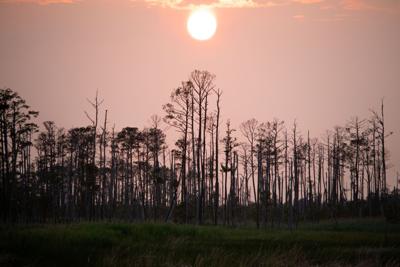
Tidwell鈥檚 new book, 鈥淭he Lost Trees of Willow Avenue,鈥� looks beyond Takoma Park. It examines extreme weather events and climate change happening across the state. And other experts agree that the impact is vast, including on the Eastern Shore, where more dead trees can be found in the 鈥済host forests鈥� of Blackwater National Wildlife Refuge.
These things are happening because temperatures in Maryland have never been warmer.
Since the 20th century, temperatures in the state have risen around 2.5 degrees Fahrenheit, according to the National Ocean and Atmospheric Administration. But it鈥檚 more than just heat. Federal data shows the state is experiencing increasing precipitation, a higher probability of summer droughts, more extreme weather events and flooding accompanied with rising sea levels.
The impact of climate change on the state is as varied as its landscape. From vast forests and rolling farms that line the Eastern Shore to the 80.9 square miles of Baltimore City scattered with heat islands, different areas of the state will be affected by climate change in vastly different ways.
To hear Tidwell and other environmental experts tell it, the state鈥檚 poorest communities will face the greatest climate challenges. Communities on the Eastern Shore 鈥� where farmlands are becoming wetlands 鈥� and Baltimore鈥檚 city neighborhoods are at particular risk.
鈥淭here are certain communities, especially marginalized communities that won鈥檛 have the resources to adapt,鈥� Tidwell said. 鈥淲e just have to stabilize the climate before we face those truly nightmarish impacts.鈥�
The changes Maryland is likely to face are detailed in the federal government鈥檚 fifth National Climate Assessment 鈥� but the Trump administration deleted all that data from the internet on June 30. However, the Local 九色视频 Network at the University of Maryland鈥檚 Philip Merrill College of Journalism downloaded all that data months ago and used it as the basis of this story and the accompanying county summaries.
Here鈥檚 a closer look at what鈥檚 happening to the climate, and what鈥檚 expected to happen, across the state:
EASTERN SHOREThe remnants of Harriett Tubman鈥檚 birth home sit in a dying forest in Dorchester County.
鈥淭hey found the original foundations of her home and you now can鈥檛 even get there because it鈥檚 in the middle of a ghost forest,鈥� said Kate Tully, a researcher and associate professor at the University of Maryland College of Agriculture and Natural Resources.
Ghost forests 鈥� which are either partially or completely dead 鈥� can be found throughout the lower Eastern Shore in Dorchester, Somerset, Worcester and Wicomico counties. These ghost forests result from saltwater intrusion, or what Tully refers to as 鈥渋nvisible floods,鈥� where seawater creeps inland as temperatures and waters rise.
鈥淭hat鈥檚 essentially when the salt burns the tree from the inside out,鈥� Tully said.
High tides, droughts and groundwater pumping all contribute to this increasingly common phenomenon. Eventually, land plagued by saltwater intrusion turns into either marshland or open water.
As a result, Tubman鈥檚 home 鈥� only discovered just a few years ago in the Blackwater National Wildlife Refuge 鈥� is now inaccessible.
In the lower Eastern Shore, there are over 70,000 acres of forest classified by the state as ghost forests, with 90% of those acres classified as severely or very severely impacted. For a forest to fall under these classifications, at least half of its trees would be dead.
But saltwater intrusion isn鈥檛 just killing forests.
鈥淭here are farmers that are being highly impacted by the saltwater intrusion and the loss of productivity of their land,鈥� said Elliott Campbell, director of the science and research division of the Watershed and Climate Services at Maryland鈥檚 Department of Natural Resources.. 鈥淭here鈥檚 not really a way to, like, get the salt out.鈥�
Farms along the Eastern Shore, including northern counties such as Cecil, Kent, Talbot and Caroline, are known for growing corn and soybeans, used primarily to feed livestock, Campbell said. But these crops don鈥檛 grow well in salty soil, and Campbell said there is no perfect alternative.
While there are vulnerable farms throughout the entire shore, Tully said Black communities in the lower Eastern Shore are being disproportionately impacted by saltwater intrusion.
鈥淲e鈥檝e already lost so many Black farms in Black communities on the Eastern Shore,鈥� Tully said. 鈥淭here鈥檚 actually a whole history that鈥檚 already gone underwater that we will never get back.鈥�
In the Antebellum period, the lower Eastern Shore became home to many free Black people escaping slavery from Virginia and other Southern states. The tributaries of the Chesapeake Bay helped provide a living for many formerly enslaved people. But Tully said these communities 鈥� and their deep-rooted history 鈥� will disappear soon if they鈥檙e not already underwater.
The Chesapeake Bay region is the United States鈥� third-most vulnerable area to sea level rise behind Louisiana and South Florida, according to NOAA鈥檚 National Centers for Environmental Information.
Because the low-lying, largely flat area is so vulnerable, the effects of an increasing climate are much more intense than in other parts of the state. The Chesapeake Bay has already risen from 1.3 to 1.5 inches each decade over the past 100 years, and increasing temperatures would drastically increase precipitation.
The land isn鈥檛 the only thing vulnerable to climate change. Throughout the entire Eastern Shore, the fishing industry is changing.
鈥淥ne very clear example is that we never had a shrimp industry in the state until the last couple years,鈥� Campbell said.
Campbell also said blue crabs populations, which do well in warmer waters, will thrive. But the effects on the bay aren鈥檛 all positive.
Warmer waters will kill fish at an increasing rate, Campbell said. Similarly, an increase in carbon dioxide in the atmosphere increases the acidity in the ocean water, which can deplete oyster populations.
As for the Eastern Shore鈥檚 farmland and ghost forests, Campbell said the best case for this land experiencing saltwater intrusion is for it to transition into wetlands. The state has a pilot program to help farmers with that transition.
鈥淚n some cases, you see marshes forming under those forests,鈥� Campbell said. 鈥淏ut in some cases, they eventually will transition to just open water and you lose that ecosystem.鈥�
Capital 九色视频 Service reporter Rachel McCrea contributed to this report.


(0) comments
Welcome to the discussion.
Log In
Keep it Clean. Please avoid obscene, vulgar, lewd, racist or sexually-oriented language.
PLEASE TURN OFF YOUR CAPS LOCK.
Don't Threaten. Threats of harming another person will not be tolerated.
Be Truthful. Don't knowingly lie about anyone or anything.
Be Nice. No racism, sexism or any sort of -ism that is degrading to another person.
Be Proactive. Use the 'Report' link on each comment to let us know of abusive posts.
Share with Us. We'd love to hear eyewitness accounts, the history behind an article.